Services / Decarbonisation, Climate Transition & Net Zero
Decarbonisation, Climate Transition & Net Zero
Every organisation has a carbon footprint. Not every organisation has a strategy to reduce it. Measuring emissions is only the first step; real progress begins when organisations understand where emissions originate and which reduction opportunities create the greatest impact.
Whether you're taking your first steps towards reducing emissions or developing a Net Zero roadmap, we help you prioritise actions that deliver measurable environmental and business outcomes.
Climate change is already influencing markets, regulations, supply chains, investment decisions and customer expectations. Organisations that proactively reduce emissions are often better positioned to:
Reduce operational costsImprove resource efficiencyIncrease resilience against energy price volatilityStrengthen supply chain performanceMeet customer procurement requirementsAccess sustainable finance opportunitiesImprove investor confidenceBuild long term competitive advantage
Our approach
We believe decarbonisation should never become a checklist of disconnected initiatives. Installing solar panels or changing suppliers may reduce emissions, but these actions only create lasting value when they form part of a coherent strategy.
Using greenhouse gas inventories, Life Cycle Assessment and environmental modelling, we identify where emissions occur throughout your organisation and value chain, then prioritise reduction opportunities based on impact, feasibility, cost and business priorities.
What we help you with
High quality carbon inventoriesMajor emission source identificationTarget development supportImplementation roadmaps
Prioritising material categoriesSupplier engagement and capacity buildingSupplier questionnairesProcurement integration
Alternative materialsDesign optimisation and lightweightingCircular economy principlesImproved durability and end of life
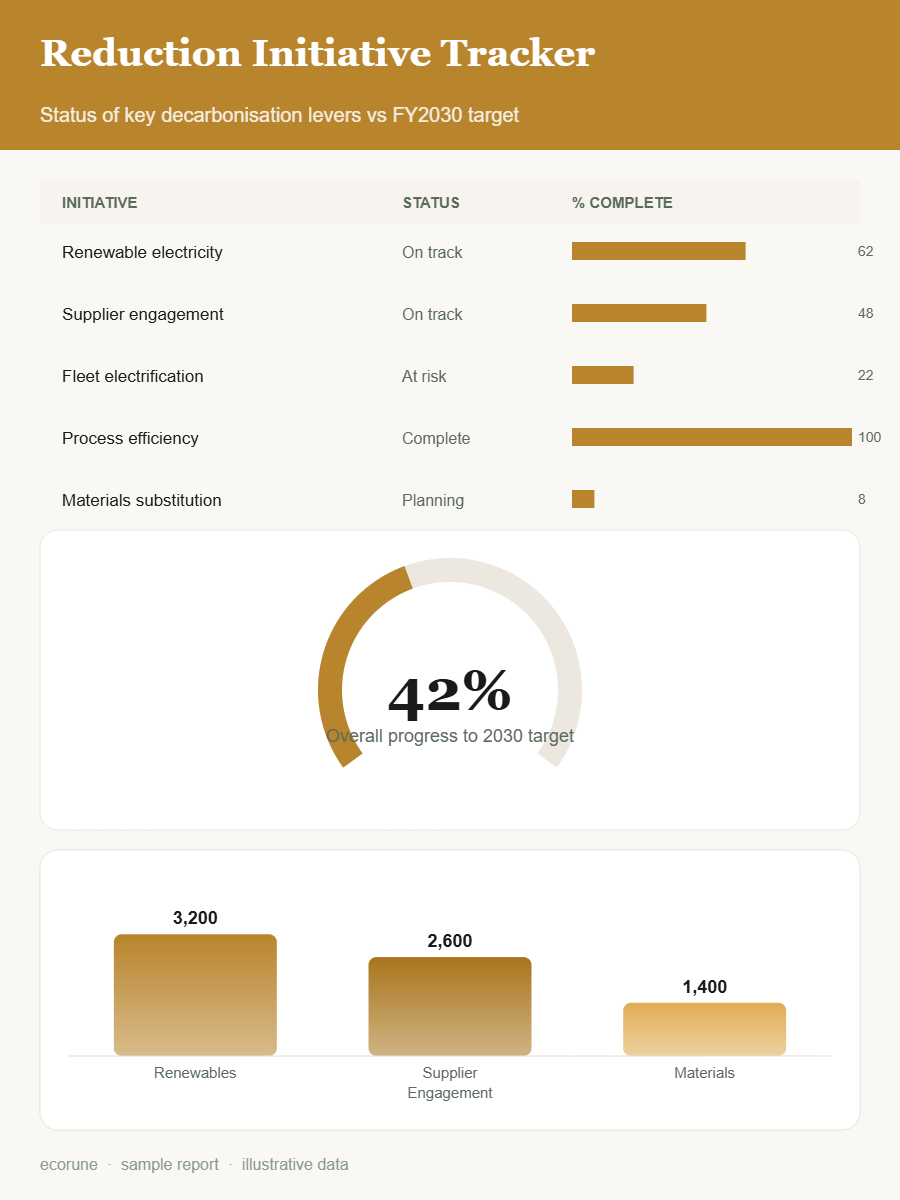
Transition plans and climate governanceKPI developmentProgress monitoring dashboardsContinuous improvement
Decarbonisation should never end with a report. Every recommendation should support a real decision, whether redesigning products, improving procurement, or engaging suppliers.
Environmental science guides our recommendations
Our expertise combines environmental engineering, LCA, GHG accounting and systems thinking, letting us evaluate opportunities using robust methodologies rather than high level estimates.
We recognise uncertainty
No roadmap can perfectly predict the future. Instead of presenting false certainty, we document assumptions, evaluate scenarios, and develop flexible strategies.
Every organisation is unique
There is no universal pathway to Net Zero. Our recommendations reflect your operations, products, value chain and long term ambitions.
What you’ll receive
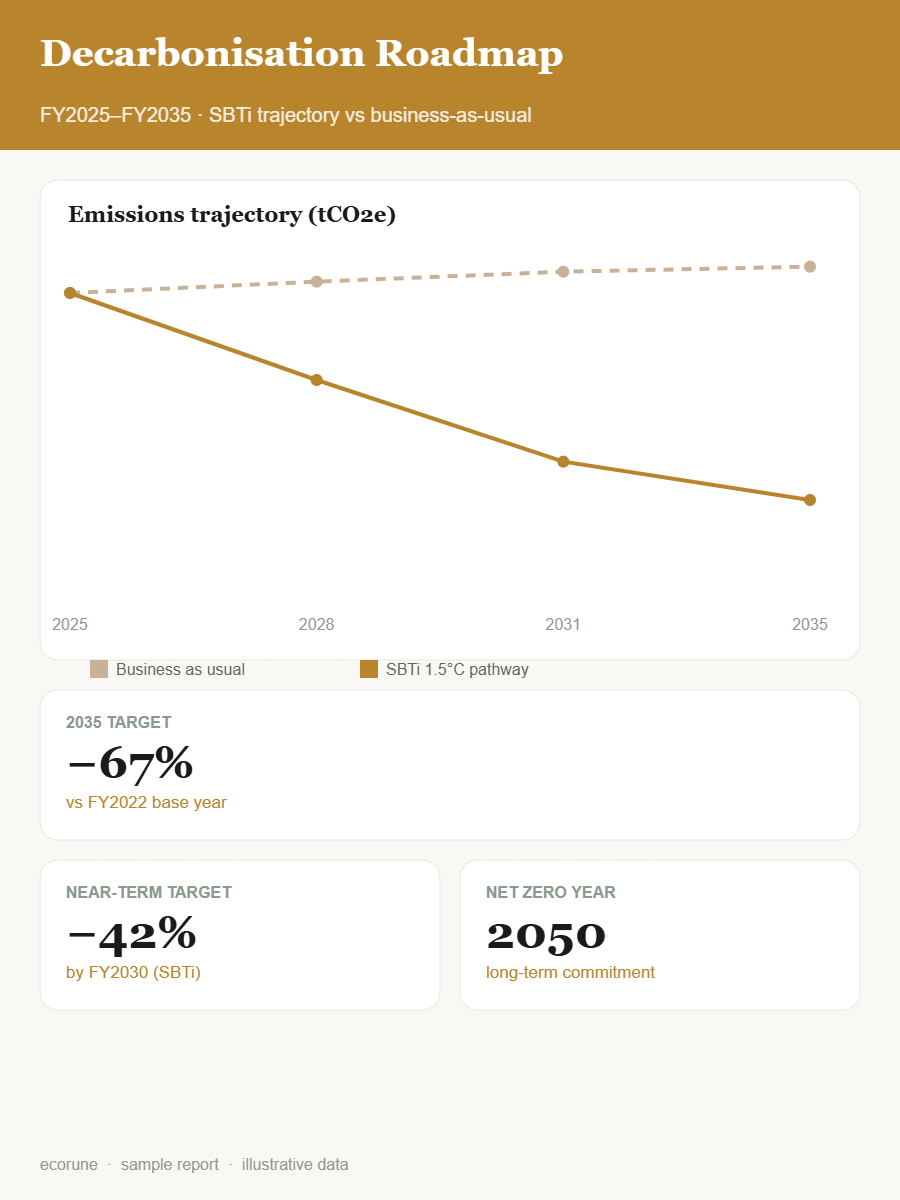
Decarbonisation RoadmapNet Zero StrategyScience Based Target SupportEmission Reduction Opportunity AssessmentProduct Decarbonisation StrategyScope 3 Supplier Engagement PlanTransition PlanClimate KPI Framework
Frequently asked questions
In most cases, yes. A reliable inventory provides the baseline needed to identify priorities and measure progress.
Yes. We support emissions inventories, target development, reduction planning and implementation aligned with SBTi principles.
Yes. We identify material categories, engage suppliers, improve data quality, and develop practical reduction strategies across the value chain.
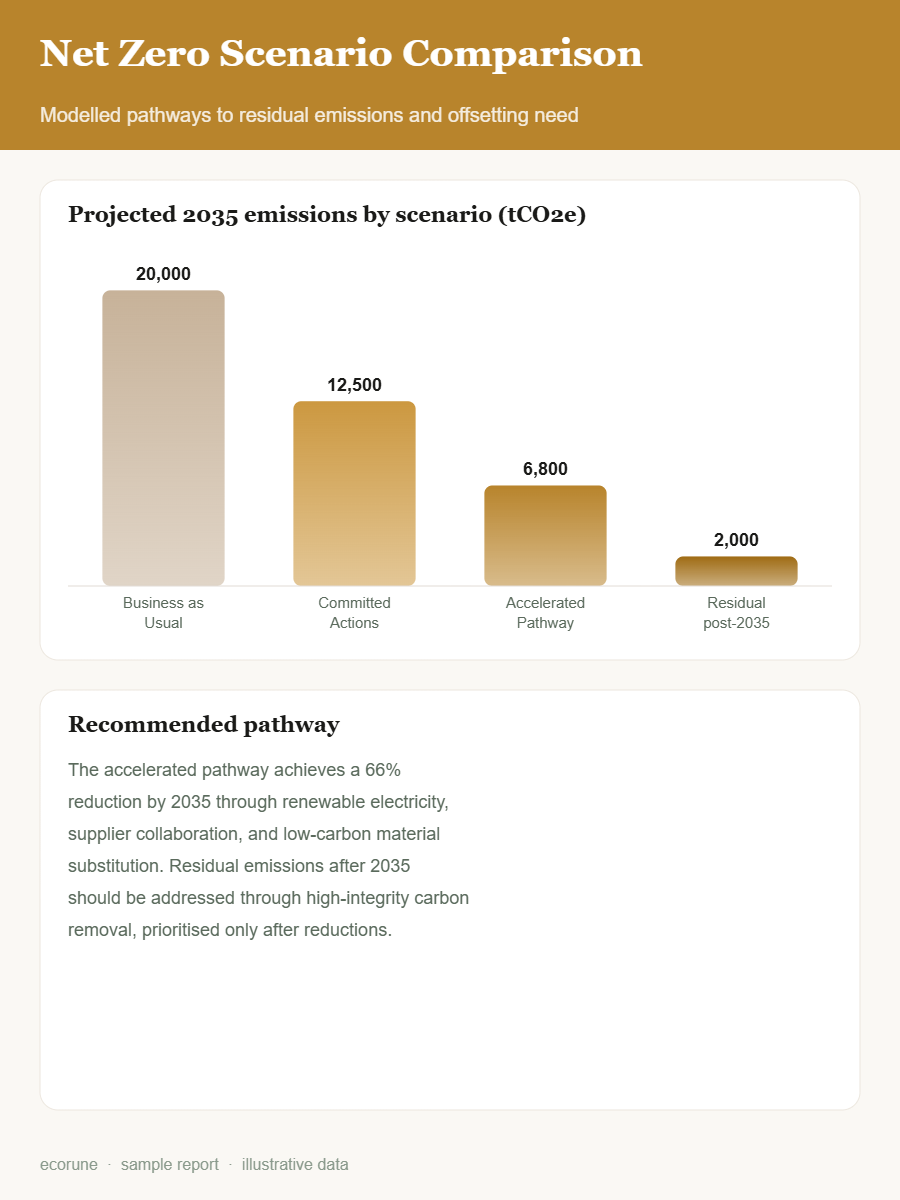
Our priority is always to avoid and reduce emissions first. We view offsetting as a complementary measure considered only after meaningful reductions have been pursued.
Start building your transition
Climate ambition means little without a clear path to achieve it. Whether you're beginning your decarbonisation journey or refining an existing strategy, we combine environmental science, technical expertise and practical business thinking to help you reduce emissions with confidence.