Climate change is reshaping markets, supply chains, regulations, resource availability, insurance costs and investment decisions. Understanding climate risk is no longer simply about satisfying disclosure requirements, it is about understanding how your organisation will operate in a changing world.
Whether you're preparing for IFRS S2, CSRD, or simply building a more resilient organisation, we help you understand what climate change means for your business, not just today, but decades into the future.
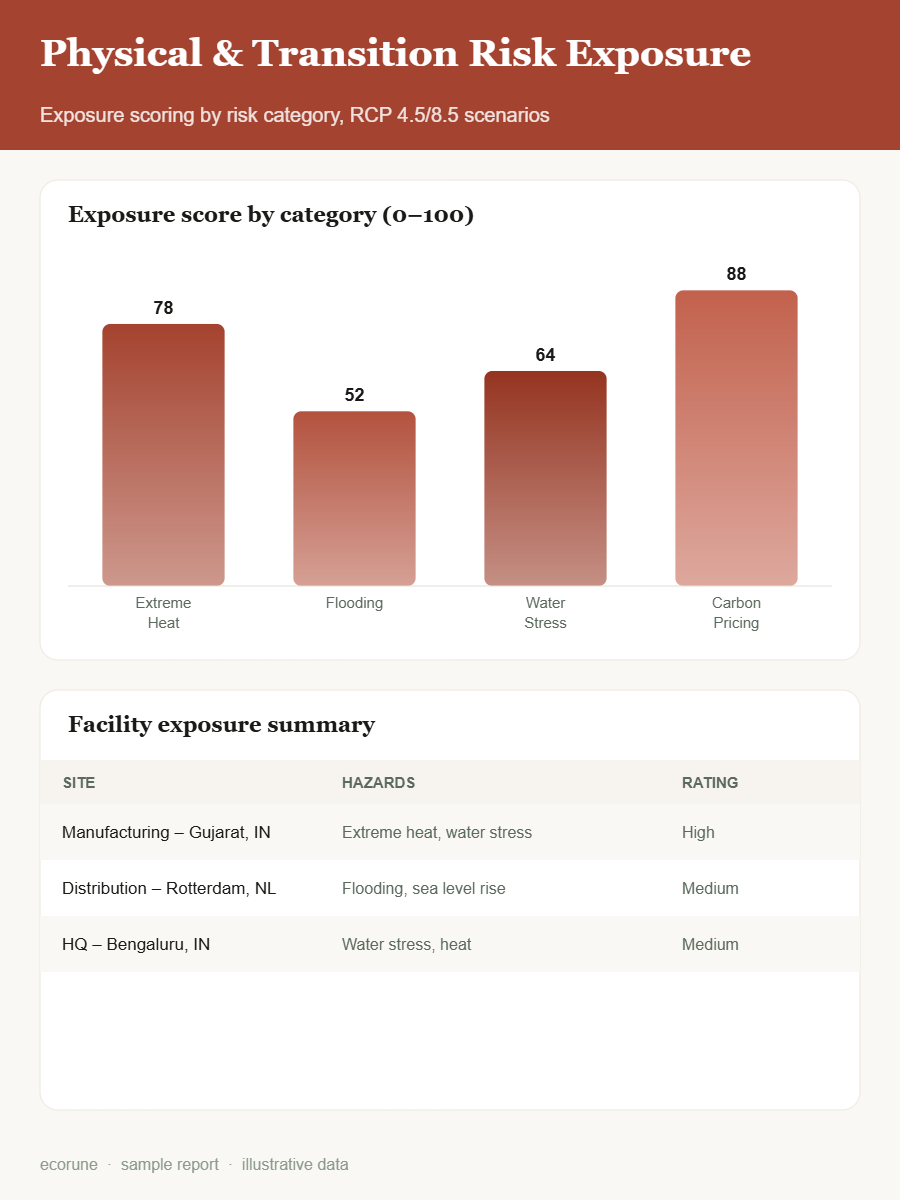
Climate related risks generally fall into physical and transition risks, which often interact and should be assessed together. Together with the opportunities they create, these include:
Extreme heat, flooding, drought, storms and wildfiresSea level rise, water scarcity and changing precipitationEmerging regulations and carbon pricingTechnological disruption and market shiftsReputational and investor expectationsNew low carbon and circular business opportunities
Our approach
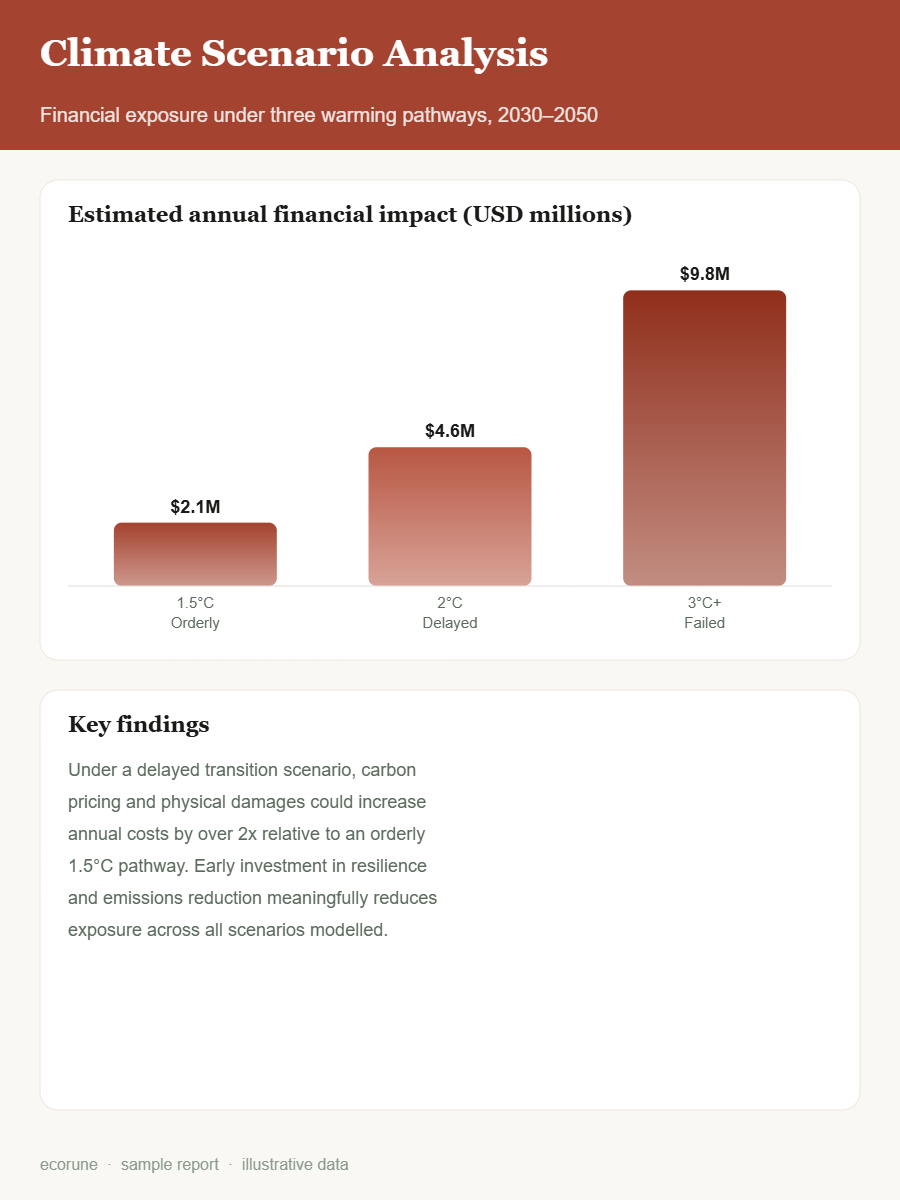
Rather than trying to predict exactly what will happen, scenario analysis helps organisations understand how different climate futures could influence business performance, exploring warming pathways, policy changes and market behaviour over time.
Every climate risk assessment begins with understanding your organisation, its operations, assets, products, supply chains and long term objectives, before we assess hazards, exposure and consequences using recognised methodologies and available climate data.
What we help you with
Facility and asset exposureWater scarcity and resource availabilityOperational disruption modelling
Carbon pricing exposureRegulatory and policy trackingMarket and technology shifts
Warming pathway scenariosInvestment and infrastructure planningBusiness continuity and supply chain resilience
Adaptation measures and business continuityClimate governance structuresBoard level reporting and KPIs
Standards and methodologies
IFRS S2TCFDCSRDESRS E1ISO 14090ISO 31000
Why ecorune
We understand environmental systems
Climate risk is influenced by complex interactions between environmental, economic and social systems. Our background in environmental engineering and LCA lets us evaluate it within a broader systems perspective.
Science informs our recommendations
Our assessments are grounded in recognised methodologies and scientific evidence. Where uncertainty exists, we explain it transparently rather than presenting false precision.
We focus on practical resilience
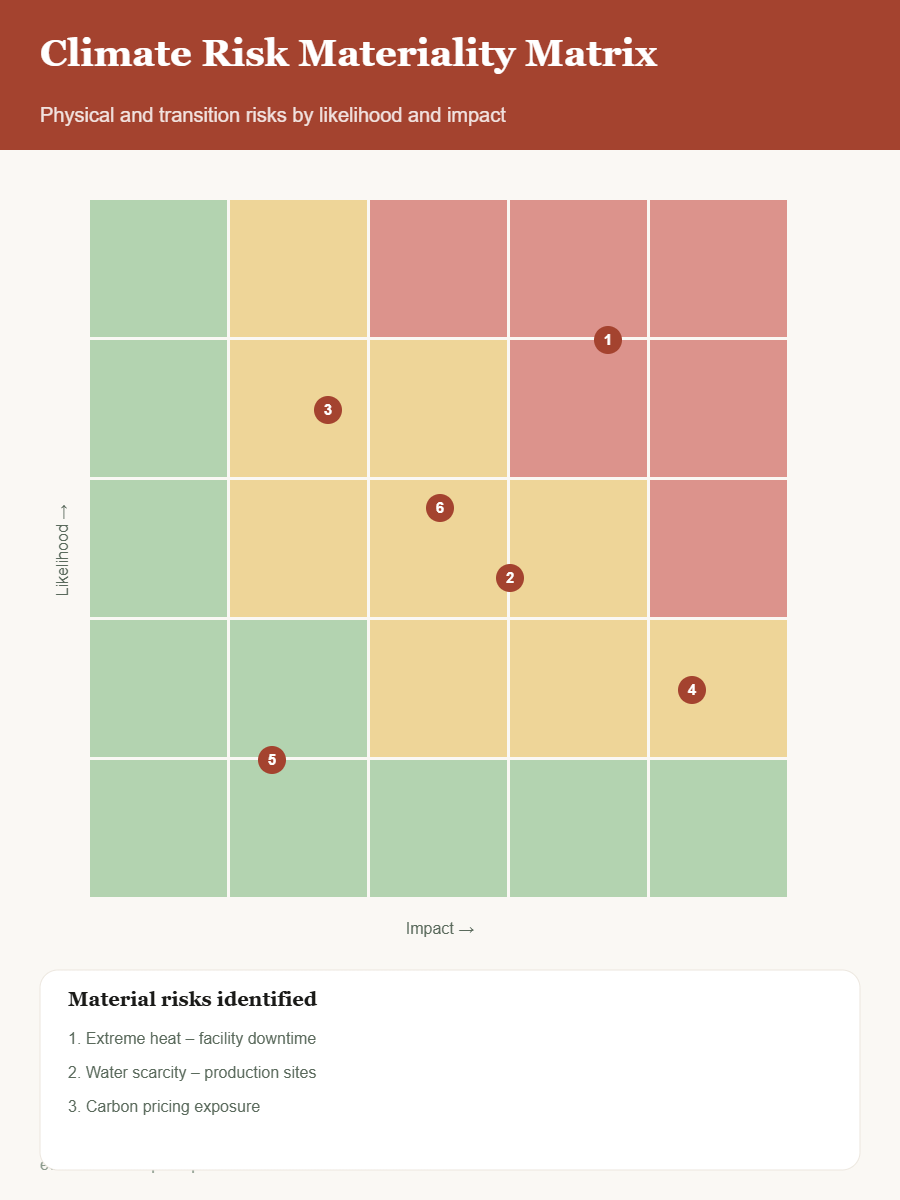
Climate risk assessments should not end with colourful risk matrices. Our recommendations support real decisions that improve resilience and governance.
Every organisation is different
There is no universal climate risk profile. Every assessment reflects your sector, operations and strategic priorities.
No. Climate related risks affect organisations of all sizes; complexity should be proportionate to your business and exposure.
Not necessarily. We work with publicly available climate datasets, recognised scenarios and stakeholder input.
Yes. Our assessments can be structured to support disclosures under IFRS S2, TCFD, CSRD and related frameworks.
We generally recommend reviewing periodically, or whenever there are significant changes to operations, strategy or regulation.
Build resilience for an uncertain future
Climate change will continue to reshape the way organisations operate. We help organisations understand climate risks, identify opportunities, and build strategies that strengthen resilience while supporting sustainable growth.